


| Mission | Method | Services | Boxwood | Results | Projects | News | Lectures & Symposiums | About | Contact |
The focus of our Organic Soils Management Process is on restoring and maintaining the natural nutrient cycling system. There is an underground revolution spreading in how we maintain our landscapes. It is occurring in the soil and it involves bacteria, fungi, microbes, and roots. This living system is now encouraged by compost and liquid biological amendments, rather than vast amounts of high nitrogen fertilizers and pesticides. F2 Environmental Design's landscape design and management techniques focus on encouraging the natural nutrient cycling systems and growth habit of the plant environment. This natural approach improves nutrient and moisture availability and retention, suppresses disease, aerates the soil, and degrades harmful pollutants in the environment. |
| The Natural Nutrient Cycle |
BENEFITS OF NUTRIENT CYCLING 2. Nutrient Availability. Nitrogen and other nutrients are more available for plants as a result of the action of microorganisms in the soil. Protozoa feeding upon bacteria and fungi excrete N in a very plant available form. The symbiotic relationship between fungi and roots help plants filter needed micronutrients from the soil. We are balancing microbial activity to optimize the nutrient cycling capacity. 3. Disease Suppression. Beneficial fungi and nematodes protect the roots of plants from potentially harmful organisms, which are always present in the soil. |
5. Aeration. Beneficial organisms aerate and give structure to the soil by creating air holes and drain pockets. This reduces compaction and maximizes water availability for use by plant roots. 6. Degradation of Pollutants. A diverse soil ecology includes organisms that consume (degrade) a wide range of pollutants over a wide range of environmental conditions. |
Microbes
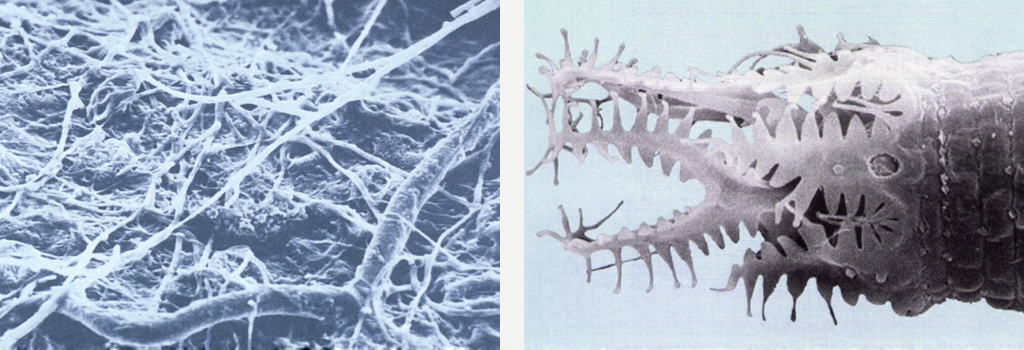
Bacteria & Fungi consume leaf litter and facilitate its decay into plant available nutrients. |
Bacterial-Feeding Nematodes release critical plant nutrients, such as nitrogen, through their feeding activities. |
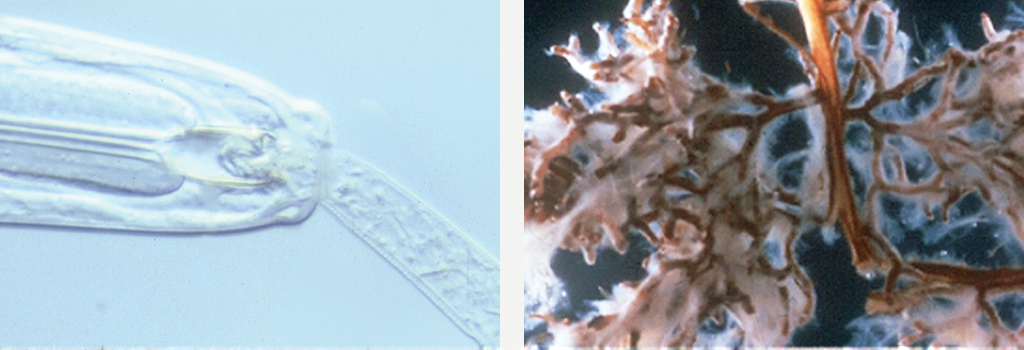
Predation by Beneficial Nematodes reduces pests, in turn improving the health of plant roots. |
Mycorrhizae are a symbiotic infection between plant root and fungi, enabling the plant to metabolize critical nutrients. |

By releasing pheromones, Fungi lures a root feeding nematode and consumes it. |
|
 |
| ©F2 Environmental Design |